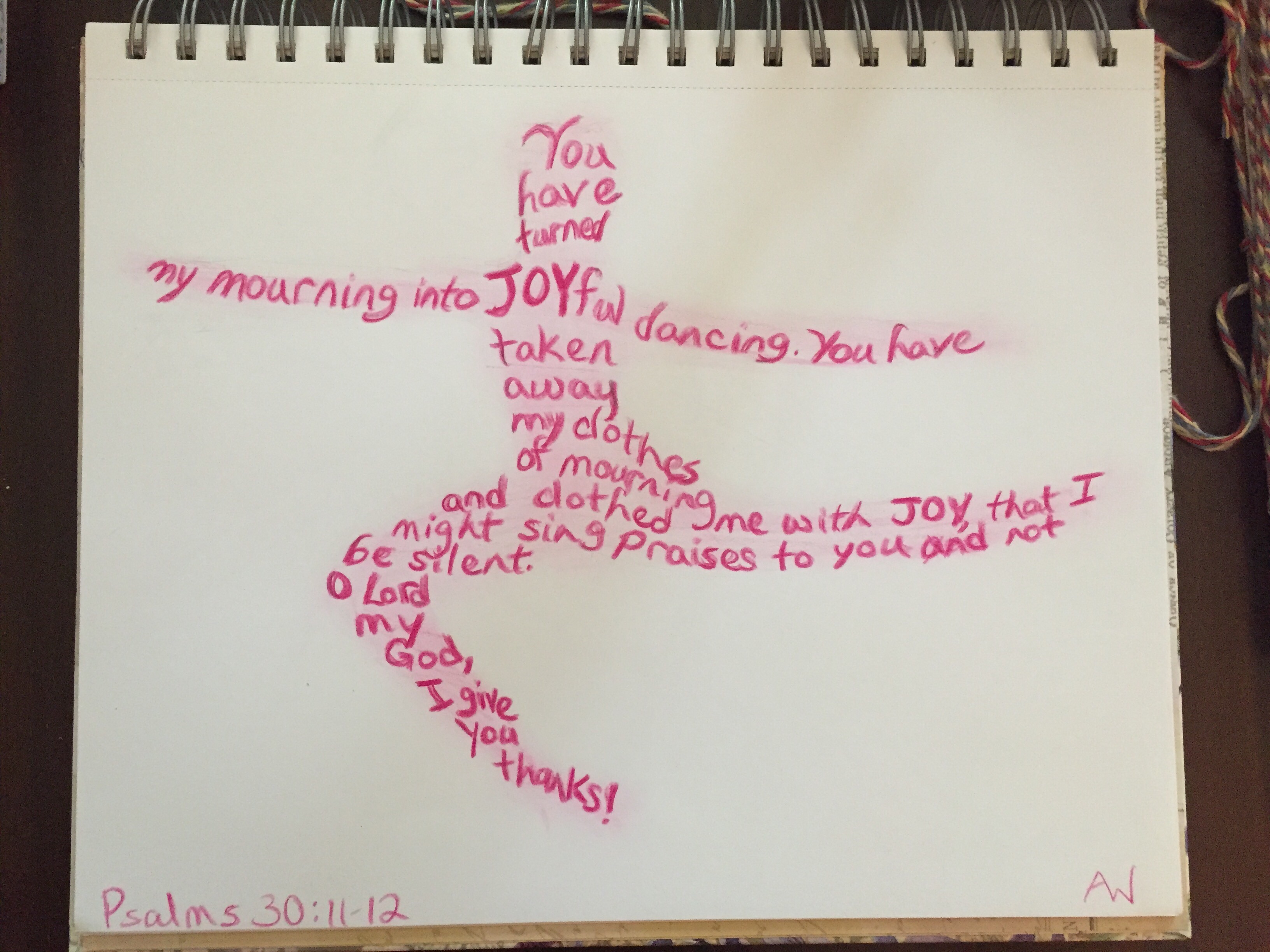
A few months ago I had a tubal ligation. Pardon the bluntness, but I feel there is no point in beating around the bush, and I can’t think of a witty introduction. I effectively closed a miserable chapter in my life. The surgical notes regarding the reason for the procedure indicated, “patient desires sterilization.” I think “desires” is a strong word, but for the sake of insurance billing, I’ll let it stand. The truth is, I did desire an end, a decision, a finality.
We decided after Engelberta was born that we were willing to try two more times to have another child “naturally” before we stopped trying. Ni of ne months after Engelberta’s birth, we lost a baby, leaving us with one more try floating around in decision purgatory where it lingered for almost three years. I felt like I was living with a noose around my neck that tightened each time anyone approached the topic until I couldn’t cope with the thought of another miscarriage. The decision came down to emotionally and mentally unstable wife/mother or surgery, so we chose surgery. I talked all of this over with my therapist, and just making the decision to quit felt like a physical weight off of my body.
I thought I might have more feelings about the ending my fertility, but I have yet to look back with any regret. Maybe each miscarriage was a bit of a death of the opportunity to carry a child, and thinking about the procedure for months before we finally made a decision gave me plenty of time to mourn the loss before it happened. It has only felt like relief and closure in the post surgical weeks.
I have added two new scars to my collection, and they seem to mirror some new emotional scar tissue. I have talked about our lost babies in conversation several times in the last few weeks, and I noticed that a lot of the sting is gone when I mention them. One person apologized for bringing up such a fraught subject, and I heard this truth come out of my mouth, “It’s our history now.” It’s history that has finally started to feel more like a scar: tender to the touch, but not a gaping wound.
With each physical scar, there is a healing process; first scabbing, then physical therapy to strengthen and protect the weakened limb until it can function more normally. My mind and heart have followed much the same process, and just like my body, my heart will never look the same – it is scarred. It will never be what it was before the injury, but it is still somehow stronger, more able to recognize pain in another heart, more able to live in the moment because the past is untenable, more able to accept that I can’t control life.
Thank God for scars.
“Tax collectors and other notorious sinners often came to listen to Jesus teach.” Luke 15:1 NLT
My pastor has often pointed out that tax collectors were so hated by society that they needed their own label because even the “notorious sinners” didn’t want to be associated with tax collectors. Of course this draws a laugh because every culture has its pariahs, and we all love to hate someone. This verse in Luke usually sets my mind to thinking about who was in the crowd whenever Jesus taught. We know that religious leaders came because their questions are often part of the story – sometimes because they were outraged, sometimes because they were genuinely confused, and sometimes to set a trap to catch Jesus in blasphemy.
We know that regular folks came to hear Jesus, too, and some of them brought their whole family. Several accounts of Jesus feeding a large crowd make mention that 5,000 men were fed, not counting women and children. We know that Jesus blessed children and chastised his disciples for keeping children away from him. It sounds like the crowds that came to hear Jesus teach were a mix of every socioeconomic group and every type of profession (if you’re a Monty Python fan, you may know that Jesus had a soft spot for cheesemakers, though…), so I love that Luke felt he needed to point out that “tax collectors and notorious sinners often came to listen to Jesus teach.”
There are a lot of reasons I love this notation. I love that this bunch of people who were obviously not part of “respectable society” came to hear Jesus, and came often. Can you see the bunched up look on the prim and proper church lady’s face when “those people” showed up and sat down to listen? We all know someone who might fall into the “notorious sinner” category – today they would probably be unwed mothers, addicts, or divorcees; I imagine the categories were much the same in Jesus’s day. I love that these people didn’t give two hoots what polite society thought about their presence – they came to hear Jesus, maybe several times. They knew they needed hope of redemption from their situation – a source of rescue outside themselves. I love imagining what people thought of the notorious sinners and tax collectors coming to hear Jesus – “It’s about time that one got some religion…” or “How dare they show up to hear a man of God speak?” I wonder how many members of polite society were genuinely pleased and nonjudgmental about the notorious sinners’ presence.
I wonder how many of us are happy to welcome into our churches with equal joy the notorious sinners of our day. Can we really claim that the tax collectors and notorious sinners of our time come often to our churches? Or is it horribly uncomfortable for someone different to come in and then to come back? Do we share the love and healing of Jesus in a way tangible enough that notorious sinners are drawn to hear more, just like they were drawn to listen often to Jesus teaching? I love that one single sentence both comforts and challenges me because Jesus still offers hope and healing to everyone, and I need to be sure that I am not hindering anyone, notorious sinner or not, that is drawn to Jesus. I must admit that it is too easy to judge someone’s appearance or situation and assume that they will never change. And in the next breath I must admit that I must not really believe that God is all-powerful or the source of grace if I can so readily judge another human. I’m really no different from a notorious sinner because I am still a sinner. And maybe that’s what I love the most about this sentence in Luke: the irony that anyone who judged the tax collectors and notorious sinners who showed up to learn from Jesus is even more in need of that teaching and grace. Here’s to notorious sinners and tax collectors; may we be ever gracious to each other.
“No man is lonely while eating spaghetti.” – Robert Morley
The waiter raised his eyebrows, and the pen stilled over his order pad while he waited for an answer.
“No, there won’t be anyone joining me after all,” the man in the candy striped bow tie sighed. “It seems she had to stay late at work.”
“Very good, sir. What can I get for you? Our chef is featuring a very special clam sauce linguine this evening.” Again the eyebrows lifted to accent the question awaiting a response, relaxing for a moment until they furrowed in concentration to write:
“Spaghetti. I’ll just have the spaghetti with meat sauce.”
The pen lifted from the page and dropped to the waiter’s side. No need to write down such a simple request. “Very well, sir. I’ll be back shortly with your salad.” As the waiter hurried off to the kitchen, the bow tie sagged closer to the table. The man slouched deep into the chair and allowed himself one long and woeful exhalation. Deflating his lungs removed most of the energy from his spine, and his nose was seconds away from touching the napkin folded in front of him. He noticed how sharp the pressed folds appeared at such close range and how the weave of the linen was slubby upon careful examination. She would have loved everything about this place. These are the fanciest napkins I’ve ever seen. The thought of his missing date forced the last bit of air out of his body, and he paused before inhaling. For a moment he pondered never breathing again, but the small panic caused by lack of oxygen reminded him that it was just a date, after all, and he must breathe no matter how morose the situation. His shoulders straightened a tiny bit, and his bow tie peeked above the edge of the table for the first time since he ordered.
He realized for the first time that the maître de was staring in concern, so he offered a thin smile to the friendly round face and looked around the room, mapping all of the colors and shadows, taking in all of the bustling action around him. He had been so preoccupied waiting for his date that he had missed the crystal festooned chandeliers and the brilliant colors of the paintings. Light twinkled off the crystal wine glasses, and the fancy napkins formed swans settling on each empty table. Most of the swans had been put to use, as tables full of families, couples, and business deals came alive with the energy of words and laughter shared.
The bow tie returned to its rightful place as the man breathed in the joy surrounding him. There would be other dates. Someday. Tonight it was enough to enjoy the warmth of spaghetti and remember that his own family and friends would soften the blow of this dinner alone. He didn’t feel lonely as he watched the waiter darting between tables with the ease of a dancer, taking a final bow to set the plate of steaming spaghetti on the table. He felt the energy surging around the room enter his lungs as he inhaled the smell of garlic and meat and tomato sauce, and all felt right in the world for at least that one breath.
I may have written this blog before, so stop reading if you’ve heard this before. We are all works in progress, and some days we make more progress than others. But our failures don’t define us any more than our successes do. One of the hardest lessons for me to learn is that I am not the sum of what I do. It’s really easy to tell myself who I am based on what I do. For men, that tends to be based on your job. For women, that tends to be the roles we inhabit: wife, mother, friend, bookkeeper, housekeeper… I judge my progress on how much I check off my to-do list or how well I think I have done my assorted jobs instead of on how well I followed Christ with my whole life.
Sometimes I butt heads with Paul, but I love the imagery of Philippians 3 where he tells his readers to keep running, “I don’t mean to say that I have already achieved these things or that I have already reached perfection. But I press on to possess that perfection for which Christ Jesus first possessed me. No, dear brothers and sisters, I have not achieved it, but I focus on this one thing: Forgetting the past and looking forward to what lies ahead, I press on to reach the end of the race and receive the heavenly prize for which God, through Christ Jesus, is calling us.” (Philippians 3:12-14) We are all running a race; we aren’t all running the same race, but we are all looking forward to what lies ahead, and our habits today will determine what finish line we’re seeking.
If you follow Christ, then the ultimate finish line is the heavenly prize Jesus claimed for you when he redeemed you, but it doesn’t mean you shouldn’t have earthly goals, too. Your earthly goals should honor Christ, but they may not be specifically spiritual in nature. I have set some fitness goals (which now need adjusting, as Engelberta decided she and I must compete on “American Ninja Warrior” when she gets “big” next week…), and they may seem silly to someone in good shape, but I am determined to do at least one pull-up before I die. The other goals are far more achievable, as I have done them all at least once in my life, but the pull-up has eluded me since the days of Presidential Fitness Testing in elementary school. But I am pressing on toward my goal. Some days I feel like I am never going to make it, and other days, like today, I realize that I am slowly getting stronger. My form is getting better, I can accomplish more challenging workouts, and one day soon that pull-up is going to happen – not immediately, and not if I don’t keep working towards it, but soon enough that I want it even more with each day of pressing on and looking towards the prize.
So now my challenge is to chase after each of my goals, especially the ultimate goal of seeing my faith perfected through Jesus, as hard as I chase after my pull-up. It’s harder to measure spiritual growth, but those moments of reflection when you realize that you are stronger than you were before, you react differently than you used to, or you more often than not see people as who God created them to be make me want that prize all the more.
I have been asked my whole life as some sort of personality test whether I like the beach or the mountains better. There are those who feel the call of the sea, and then there are those who commune with trees. And then there’s me. I feel most at peace in nature, no matter where that is.
I am writing this sitting next to the ocean, and right now I feel like I could be one of the ancient mariners whose heartsong was the call of waves crashing on the shoreline. Standing at the shore and seeing only water and sky until the edges blur and they meet in a haze of blue, I feel how vast this small section of earth is, how small I am, and how eternally enormous God is. The feel of the water lapping at my legs in a push-pull rhythm is timeless and echoed in my veins through the chambers of my heart. Sand shifting beneath my feet and running back into the ocean like my spirit running after God even when I seem to be standing still. I can stand there for hours facing the wind, lifting my arms to feel it rush by me and feeling grounded, connected to the universe, the sound of the waves encompassing my soul.
But in the mountains, in the woods, I feel the same tug on my soul. Sunlight dappled forest floors hint at the marriage of leaves and branches. The rush of the wind through the trees sounds as big as the ocean, but I can still hear a twig snap and a single bird chirping. I can trace the line of ants crawling across boulders bigger than me that form mountaintops I have to lean back to see. Minutia and magnitude in one glance.
That’s God: eternal and present, everywhere and with me, an infinite depth of wonder to study for the rest of my life.
I touched on this in the Forgiveness – Part 1 post, and this “study” of forgiveness would be incomplete without this final part. Forgiveness in our lives is all modeled on the forgiveness of Jesus in the form of his death as a sacrifice for all of our sins (our less-than-perfect moments). Even in the Torah and books of the prophets in what Christians call the Old Testament, a blood sacrifice was required to cover sins and make people righteous in God’s eyes. The very first sin of Adam and Eve required a blood sacrifice that God himself prepared for Adam and Eve by killing animals and using their skins to cover Adam and Eve’s nakedness when they left the Garden of Eden. Other religions view less-than-perfection differently, but almost all see good and evil like a balance scale where enough good to outweigh the bad makes things right.
This is a noble way to see good and evil, but it leaves a lot of gaps for me intellectually and spiritually. How much good is enough to make up for the bad in my life? Is there a ratio of good:bad that will ensure that I will be a good person or go to heaven? Is 2:1 enough, or should it be more like 10:1? What is the standard for my good acts – are small acts of kindness like compliments enough to make up for losing my temper? What if I do something worse, like kill someone – what can possibly make up for that on the scale? If enough people put good mojo out into the world, will it ever be enough to keep horrible things from happening? If everyone on the planet could pay it forward for a day or a week, could we keep earthquakes at bay or stop mass shootings? How much good karma would it take to prevent bad karma from happening at all? If I can repeat my life through multiple reincarnations, could I ever be good enough to make it heaven, or will I be stuck in an endless loop of repeating my less-than-perfection?
The problem with all of these beliefs for me is that the focus is always on self – what can you do to earn a place in heaven? Any system based solely on your actions is a meritocracy, and you must work your way into heaven. The worst part of this for me is that there are no clear guidelines for just how good you have to be, and there are no real explanations for why evil exists or why bad things happen to good people. As badly as Christians often explain it, God does provide a foundation for all of these questions I have about a meritocratic heaven.
Heaven isn’t a meritocracy; there’s nothing you can do to earn it because grace is a gift of God given with no strings attached except to follow Jesus. There is a clear standard for perfection and sin, and there is a clear consequence for sin. Sin is anything less than perfection in our thoughts and actions, and the consequence of sin is death (separation from God forever). The only way to regain our connection to the Creator of our souls is to accept the sacrifice of Jesus and allow him to lead us through life on earth. In exchange, our relationship with God is restored, and we will live forever with our Creator in heaven when our bodies pass away. No earning our way to perfection; no earning a place in heaven because it is a gift of God. Our good works are the result of following Jesus.
Because sin entered our world, our world is broken as well; things will never be perfect here like they were in the Garden of Eden until God makes the whole world new. Until that happens, bad things will happen no matter how good we are or how well we imitate Jesus. Evil is loose in our world, and we can’t do enough good deeds to wipe it out. Only Jesus can eradicate evil. I touched on this in the Forgiveness – Part 3 post. God’s grace saves us from condemnation, but it doesn’t exempt us from experiencing evil here on earth.
Here are some passages of the Bible that I think tie up the old system of animal sacrifice for sin with the new promise made through Jesus’s sacrifice of his life for ours.
“In fact, according to the law of Moses, nearly everything was purified with blood. For without the shedding of blood, there is no forgiveness. That is why the Tabernacle and everything in it, which were copies of things in heaven, had to be purified by the blood of animals. But the real things in heaven had to be purified with far better sacrifices than the blood of animals. For Christ did not enter into a holy place made with human hands, which was only a copy of the true one in heaven. He entered into heaven itself to appear now before God on our behalf. And he did not enter heaven to offer himself again, like the high priest here on earth who enters th3e Most Holy Place year after year with the blood of an animal. If that had been necessary, Christ would have had to die again and again, ever since the world began. But now, once for all time, he has appeared at the end of the age to remove sin by his own death as a sacrifice.” Hebrews 9:22-26 NLT
“When Adam sinned, sin entered the world. Adam’s sin brought death, so death spread to everyone, for everyone sinned. Yes, people sinned even before the law was given. But it was not counted as sin because there was not yet any law to break. Still, everyone died – from the time of Adam to the time of Moses – even those who did not disobey an explicit commandment of God, as Adam did. Now Adam is a symbol, a representation of Christ, who was yet to come. But there is a great difference between Adam’s sin and God’s gracious gift. For the sin of this one man, Adam, brought death to many. But even greater is God’s wonderful grace and his gift of forgiveness to many through this other man, Jesus Christ. And the result of God’s gracious gift is very different from the result of that one man’s sin. For Adam’s sin led to condemnation, but God’s free gift leads to our being made right with God, even though we are guilty of many sins.” Romans 5:12-16
This sounds like a lot of religious mumbo-jumbo, and I guess maybe it is. The bottom line for me is that I don’t want to be my own standard bearer; if I am a standard for goodness, I am a miserable example, and there is no hope for humanity. I have looked long and hard into my own soul, and I know what darkness lives there. I think I’m a pretty good person, so if I can see such darkness in me, I have no hope of doing enough good deeds to earn a place in heaven. Jesus for me means freedom from myself and my darkness. He told us, “Come to me, all of you who are weary and carry heavy burdens, and I will give you rest. Take my yolk upon you. Let me teach you, because I am humble and gentle at heart, and you will find rest for your souls. For my yoke is easy to bear, and the burden I give you is light.” (Matthew 11:28-30) Jesus offers release from the relentless burden of myself and my less-than-perfections. He offers me rest for my soul, and I desperately want and need that respite.
If you have seen Christians behaving badly or judging the world, I’m sorry; we all mess up, and we all need forgiveness. None of us speaks for Christ – God doesn’t need us to explain him or to judge the world, because he explains himself, and he is the judge. If you have read this and think I am judging you for believing something different – see that last sentence. I have great respect for any person who has explored their faith and determined their own beliefs, especially if you act on those beliefs. This is merely an explanation of my basis for forgiveness. It is not my job to judge you, it is only my job to follow Jesus, and I have felt from the beginning of this topic that I should write this. If you believe something different than me and would like to discuss anything I have written here further, please contact me. If I have written anything that sounds like something you want to learn more about, please contact me. You can send me a message on FB if we’re FB friends, or you can e-mail me at mabbatblog@gmail.com.

I’m working on faces, so I’m sketching from photos for a while. This is one of Amelia at about 14 months.
This will sound sacrilegious to some, but I will venture ahead anyway. I experienced loss for which no one was to blame. I had ten miscarriages, and no cause was discovered for most of them – no disease, no external cause – nothing. I had no place to direct blame; there was no discernable cause for my loss – not cancer, not addiction, not car wrecks, not old age… Only God – who could have stopped it, who could have stopped every single miscarriage from happening. I watched other women experience scares in their pregnancies, but each one of them ended in a miraculous save by God. Where was my miracle? Why wasn’t I loved enough by God for him to at least answer my prayer to leave me barren if I was destined to lose every baby that attached itself to my uterus? How could a God who let me lose ten babies be good and loving? He was anything but kind to me. Maybe he didn’t directly cause my miscarriages, but he could have stopped them, and that’s almost the same thing as causing them if God is omnipotent, right?
I thought all of those things. I thought my faith must not be strong enough because my prayers were going unanswered while I saw miracles happen around me. I hated God. I was so angry I couldn’t talk to him, I couldn’t read the Bible, and I couldn’t sing in church if I even went at all. We church people say a lot of stupid things when we try to comfort people who have suffered traumatic loss: “It’s all part of God’s plan,” “It was just God’s timing,” and my favorite, “It will all work out when he wants it to.” So, he didn’t want ten of my pregnancies to work out?!? God PLANNED for me to suffer like this?!? No, thanks. I’m going to rethink everything I know about God while you spout churchy words at me because that does NOT sound like a merciful God to me.
I had no idea what to do with the anger I felt for God, so I turned to a Bible study book about dealing with pregnancy and infant loss. I only got more frustrated when the author said in one chapter that it’s okay to be mad at God and then said that being angry at God is a sin in the next chapter. I may have burned that book… The thing is, the author wasn’t all wrong. Being angry at God isn’t a sin, but what you do with that anger might be. I love reading the Psalms because they are written by people who poured out their whole hearts to God. There’s plenty of anger and plenty of blaming God, but there’s also the realization that God is unshakeable, unchanging, and undeniable. It is okay to be angry at God and to tell him you are angry; it is not okay to live in that anger and act on it.
The Bible has pretty simple guidelines for anger: “And ‘don’t sin by letting anger control you.’ Don’t let the sun go down while you are still angry, for anger gives a foothold to the devil.” Ephesians 4:26-27 NLT We do stupid stuff when we’re angry – well, I do; you are probably more mature than I am and can hold your temper. When anger controls you, you will act more rashly and more harshly than you should, and you will do something you’ll regret once you calm down. Those angry actions and words are what’s sinful – not the anger itself. So be angry at God if you need to, but then you have to dump it all out and tell him everything and forgive him – let it go. Because the truth is we do not deserve anything but judgment from God’s hand. I am a sinner (I am not perfect like God is perfect), and the consequence of my sin is God’s judgment and death. We live in a world full of sin where horrible things happen because of our sin, and while God intervenes sometimes, we are not owed any miracles. While we live on this earth, we will suffer because the world is broken and in desperate need of a savior to make it whole and perfect again. But God is still God; he is always good and just and merciful. He is still in control, and he still loves you.
Living in anger “gives a foothold to the devil” by allowing you to think that God owes you something or that your suffering has earned you the right to demand things from God. Don’t let anger narrow your focus to the one thing you didn’t get from God. Look around you at what he has provided and be grateful you haven’t gotten the punishment you truly deserve. Once I stopped being angry and forgave God, I regained the relationship with him I’d been missing. I realized that I didn’t have the babies I so desperately wanted, but he had provided for all of my physical needs; he gave me a kind and wonderful husband; he gave me nurturing family and friends; and he gave me purpose. Forgiving God wasn’t about God at all, but it was all about my relationship with him and how I viewed myself in light of his forgiveness of my sins.
If you’re feeling angry at God, you’re not going to hell for feeling angry. You’re actually in good company since David, who wrote a lot of the Psalms, was called a man after God’s own heart. But stay in that company and follow David’s example: lay it all out before God, and then realize that he is God, and he’s got this. He’s got you. Don’t miss out on a relationship with your creator because you’re mad.
If you live in the Birmingham, Alabama area, this plug is for you. I am hosting a small group of ladies in my home on Monday evenings beginning August 22. We will be starting with the book Imagine That by Manuel Luz as a way to explore every Christian’s calling to be an artist – we are, after all, all created in the image of God, who is the Ultimate Artist. You do not need to be an artist to join in! We will explore different art genres to help you focus on finding your gifts and then honing them.
I am ridiculously excited about this group!!!!!!! (I am generally against the superfluous use of exclamation points, but I would use all the exclamation points in the world if it would demonstrate just how enthusiastic I am about this topic!!) Reading Imagine That has been transformative for me in how I experience my writing and art as an act of worship and a way to develop my relationship with Jesus. If you feel like you’re an artistic type who often feels left behind in traditional Bible studies and church settings, this is the place for you. If you think you don’t have an artistic bone in your body, this is a safe place for you to discover what art form speaks to you (you might be a painter or a photographer or a cook or an engineer or a runner…). If you think church people are a bunch of self-righteous nuts, this is a safe place to come and see that we are really all just humans trying to get it right. Wherever you are, this will be a fun time of building relationships with other women and with God while performing daring acts of art. How can this not be amazing?!?!!
If you have concerns about childcare or questions, please let me know. You can send me an e-mail at mabbatblog@gmail.com, or send me a FB message. If joining a group sounds intimidating, please talk to me before you make up your mind not to come. To sign up for this group or to see what else Green Valley small groups have to offer, check out the Life Groups link at GVBC Life Groups.
 Mabbat